Panama Mango Program Planning: Commercial and Logistics Alignment
2026-02-09 · 6 min read
How to structure Panama mango programs with seasonal windows, maturity targets, and reliable export execution.
Panama Mango Program Planning: Commercial and Logistics Alignment
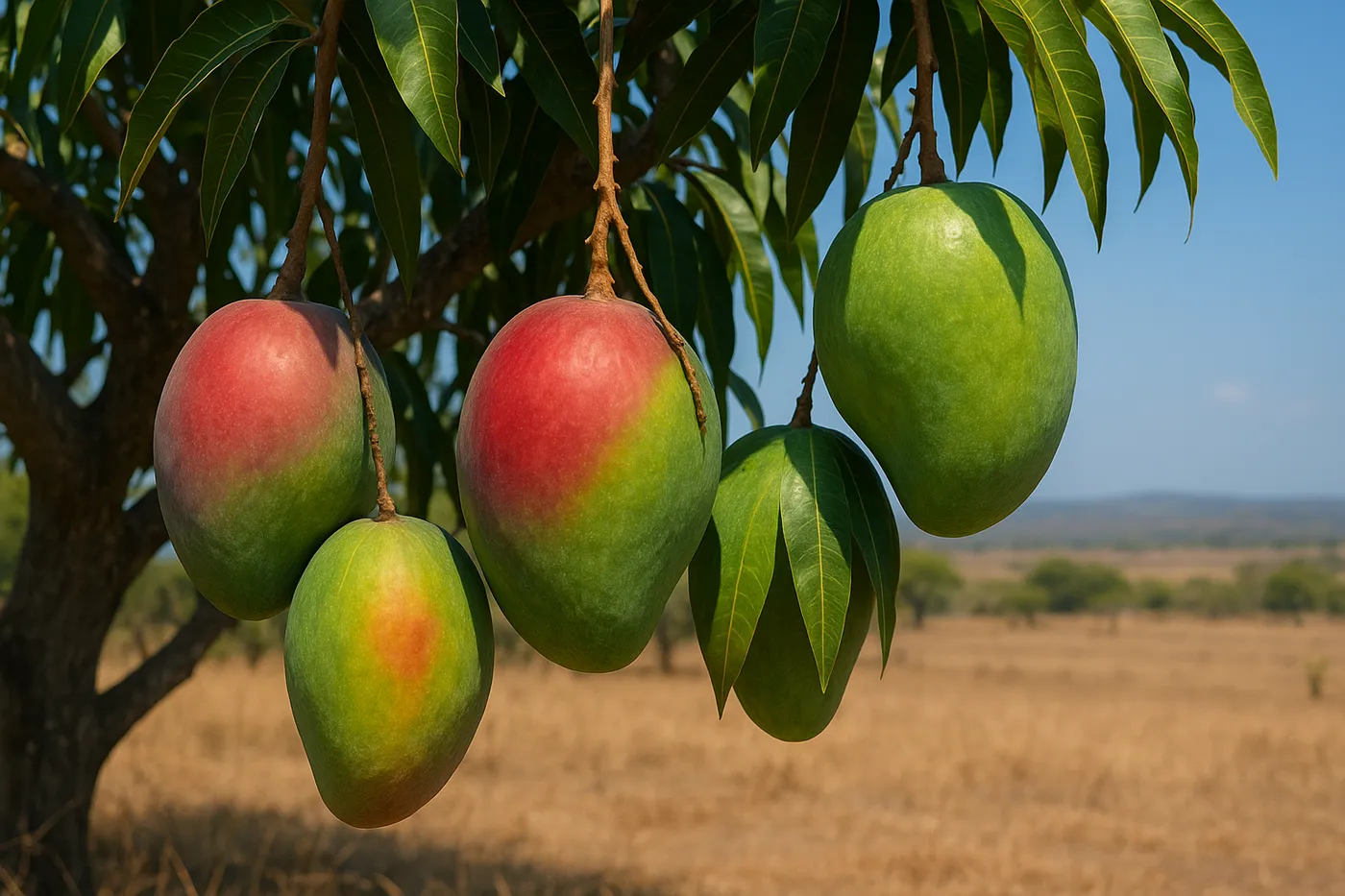
Mango is one of the most demanded tropical products globally. While Panama isn't the region's largest exporter, it has an interesting seasonal window and the capacity to offer premium programs with personalized attention.
If you're considering Panama mango for your import program, here's what you need to know.
Mango varieties available in Panama
Panama produces several mango varieties, but the most relevant for export are:
Tommy Atkins
- Dominant in export: Good shelf life, transport resistant
- Profile: Moderate sweetness, firm texture
- Typical weight: 450-650g
- Limitation: Fibrousness, less aromatic profile than other varieties
Kent
- Premium in sophisticated markets: Shorter shelf life but superior flavor
- Profile: Very sweet, creamy, aromatic
- Typical weight: 500-750g
- Limitation: More sensitive to handling, requires better cold chain
Haden
- Traditional variety: Good sweetness/acidity balance
- Profile: Aromatic, attractive coloration
- Typical weight: 350-500g
- Limitation: Limited availability for exportable volume
Keitt
- Late season: Extends the supply window
- Profile: Sweet, less fibrous than Tommy
- Typical weight: 600-900g
- Limitation: Green color that confuses consumers
Seasonal window for mango in Panama
Unlike pineapple, mango is strictly seasonal. In Panama, the main window is:
| Period | Availability | Notes |
|---|---|---|
| January - February | Season start | Limited volume, early fruit |
| March - May | High season | Peak volume, best quality |
| June - July | Season close | Decreasing volume, late varieties |
| August - December | No production | No fresh mango available |
Implication for buyers: If you need Panama mango, you have a 4-5 month window. Planning must start in November-December to secure space and commitments.
Production regions
Azuero Peninsula
- Main mango production zone in Panama
- Dry climate ideal for flowering
- Reasonable access to ports
La Chorrera
- Complementary production
- Medium-sized farms with potential
Chiriquí
- Limited but premium variety production
- Greater distance to ports
Export quality requirements
Standards vary by destination market, but base parameters are:
Typical export specifications
| Parameter | Acceptable range |
|---|---|
| °Brix | 12-18 (depending on variety) |
| Weight | 300-900g (depending on caliber) |
| Skin color | No defects, uniform |
| Firmness | Firm to touch, no bruising |
| Maturity | 75-85% (for maritime transit) |
Defects that cause rejection
-
Anthracnose: Black spots indicating fungi
-
Latex burn: Spots from poor latex handling at harvest
-
Mechanical damage: Bruises, cuts, impact marks
-
Over-maturity: Soft fruit that won't withstand transport
-
Low Brix: Flavorless fruit that generates claims at destination
-
Deformation: Asymmetric fruit doesn't meet retail standards
Phytosanitary treatment
To export mango from Panama to certain markets, hot water treatment against fruit fly is required:
Hot Water Treatment (HWT)
- Temperature: 46.1°C for 65-90 minutes (depending on caliber)
- Purpose: Eliminate Ceratitis capitata larvae
- Requirement: Mandatory for US, Mexico, some Asian markets
- Consideration: Slightly reduces shelf life
Markets that don't require HWT
- European Union (some countries)
- Canada (under certain conditions)
- Chile (with phytosanitary certification)
Important: Verify specific requirements of destination country before committing to program.
Export logistics
Cold chain
| Stage | Temperature | Humidity |
|---|---|---|
| Post-harvest | Controlled ambient | - |
| HWT treatment | 46.1°C | - |
| Pre-cooling | 10-12°C | 85-90% |
| Container | 10-12°C | 85-90% |
| Retail | 12-15°C | - |
Note: Mango is susceptible to chill damage below 10°C. Don't over-cool.
Transit times
| Destination | Transit days | Remaining shelf life |
|---|---|---|
| Miami | 3-4 | 10-14 days |
| Los Angeles | 8-10 | 7-10 days |
| Rotterdam | 12-15 | 5-8 days |
Presentations
- Standard box: 4kg net (caliber per variety)
- Common calibers: 6, 7, 8, 9, 10, 12 (fruits per box)
- Packing: Corrugated cardboard with cells or trays
Comparison: Panama vs. other origins
| Factor | Panama | Mexico | Ecuador | Peru |
|---|---|---|---|---|
| Season | Mar-Jun | Mar-Sep | Oct-Jan | Dec-Mar |
| Volume | Low | High | Medium | High |
| Varieties | Tommy, Kent | Ataulfo, Kent, Tommy | Tommy, Kent | Kent, Tommy |
| Price competitiveness | Medium | High | Medium | High |
| Attention per lot | High | Variable | Medium | Variable |
Panama advantage: For buyers seeking personalized attention and medium-volume programs, Panama offers flexibility that large origins can't match.
Commercial terms
Panama mango programs are quoted by variety, caliber, volume, and destination rather than a published list price. Terms vary by season and commitment, so each quote is structured to your program.
Request a quote for your Panama mango program and our team will return commercial terms based on variety, volume, and destination.
How to structure a program with Dulce Tropical
Our proposition for mango includes:
- Pre-season (Nov-Dec): Volume projection, specification alignment
- Season start (Jan-Feb): Farm confirmation, quality testing
- High season (Mar-May): Shipment execution
- Close (Jun-Jul): Final volume adjustment, program evaluation
We don't sell "whatever's available" mango. We work with planning to deliver what we promise.
If you want to explore a Panama mango program for your next season, contact us now. Planning for 2026 season starts today.