
Reefer Temperatures for Tropical Fruit: Set Points, Humidity & Cold-Chain Management
Recommended carrying temperatures for pineapple, dragon fruit, papaya, watermelon, and melon — plus why pre-cooling and pulp-temperature discipline decide arrival quality.
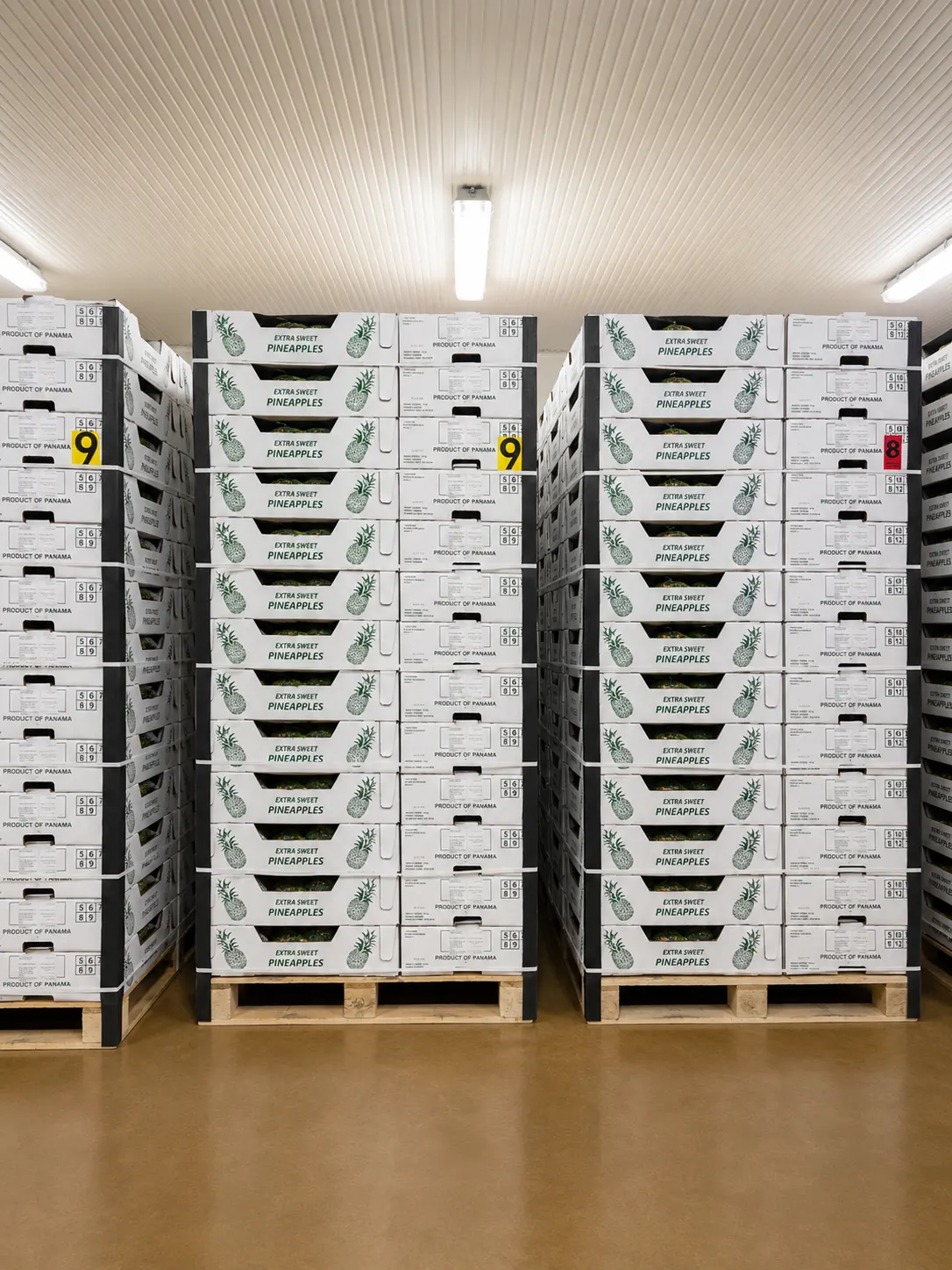
Reefer Temperatures for Tropical Fruit
Tropical fruit is chilling-sensitive: run the container too cold and you get internal browning and surface pitting; too warm and ripening outpaces the transit. Arrival quality is decided by three disciplines — the right set point, fast pre-cooling, and unbroken temperature continuity.
Carrying set points by product
- MD-2 pineapple: 7–8°C pulp set point, 85–90% relative humidity. Colder risks chilling injury; warmer accelerates translucency.
- Dragon fruit: 7–10°C. Colder holds risk chilling injury on the skin and bracts; warmer accelerates softening.
- Papaya: 10–12°C, and speed matters more than for any other fruit here — which is why premium papaya programs favor air freight.
- Watermelon: 10–15°C. Watermelon tolerates a wider band but suffers internal breakdown if held near refrigeration temperatures for long transits.
- Melons (cantaloupe/honeydew): 3–7°C depending on variety and ripeness at cutting.
These are carrying targets; the exact program set point is agreed per specification, because ripeness at harvest and transit length shift the optimum.
Pre-cooling: the first six hours
Field heat is the enemy. Fruit cut at 28–30°C and loaded warm will overwhelm a reefer, which is designed to hold temperature, not to pull it down. Pre-cooling to the carrying temperature within hours of harvest — before loading — is the single highest-leverage step in the cold chain. For MD-2 pineapple we target pre-cooling to the 7–8°C set point before consolidation.
Pulp temperature, not air temperature
Reefer displays show air temperature; quality lives in pulp temperature. Disciplined programs verify pulp temperature at loading and record it; temperature loggers riding with the cargo close the loop at arrival. When an arrival-quality question comes up, logger data separates a transit problem from a packing problem in minutes.
Continuity through the hand-offs
Most cold-chain failures happen at hand-offs: packing to truck, truck to terminal, terminal to vessel. Structured programs minimize dwell time at each transfer and verify the container's set point, ventilation, and drain settings before gate-in.
Get these three disciplines right and a 12–16 day transit to Europe — or a 20–25 day transit to the Gulf — delivers fruit that looks like it was packed last week. Get them wrong and no set point on the reefer display will save the arrival.